Birds
Bird Toys 101: What Parrots Actually Need to Stay Sane
Pawstimate Research Team· Independent pet gear researchUpdated 8 min read

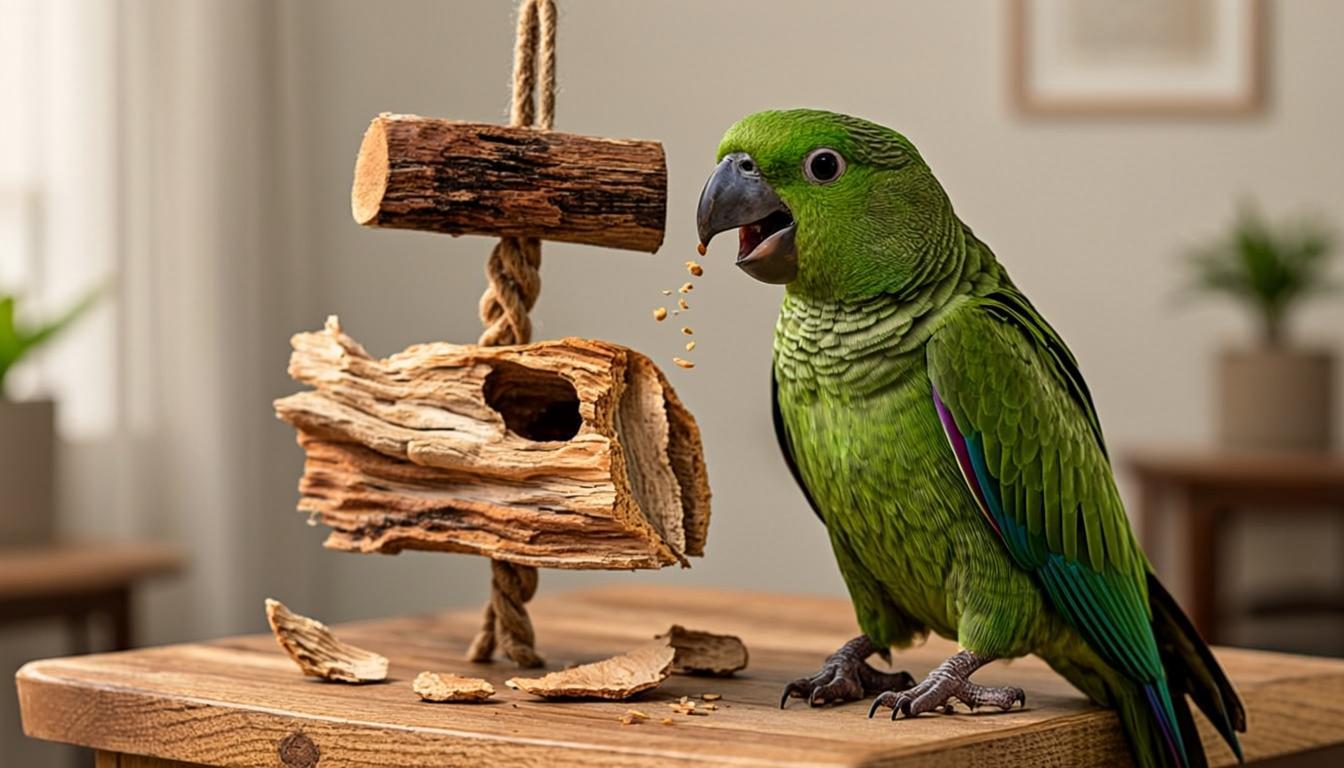
A wild parakeet spends four to six hours a day on food acquisition — flying, searching, husking seeds, processing bark. A caged parakeet with a cup of pellets finishes breakfast in eleven minutes and then has roughly fifteen waking hours to fill. Most behavioral problems people blame on "personality" — screaming, plucking, cage rage — start in that gap. Toys are how you close it.
The four jobs a cage needs covered
Foraging. The single most important category, and the most commonly missing. Foraging toys make a bird work to earn food or shred material — the behavior that fills wild parrots' days. A good starter is something shreddable and refillable: we rate the Uyoupet foraging toy 2-pack highly precisely because the corks are consumable and replaceable, so the toy is a platform rather than a one-week novelty.
Chewing and shredding. A parrot's beak grows continuously; chewing is maintenance, not mischief. If you provide nothing to chew, the cage bars, the skirting board and the antique chair volunteer. Natural wood platforms and toys do double duty — a flat wooden perch platform gives feet a rest from dowels while the wood gives the beak a legal outlet.
Foot and leg variety. Birds stand all day. A cage with identical dowel perches is like you owning one pair of shoes, flat, forever. Mix diameters and textures — natural branches, rope, one flat platform — so weight shifts and feet stay healthy.
Rotation. Here's the part most owners miss: birds bore of static toys in days. Two or three toys in constant rotation — swap weekly, retire one, introduce one — keeps the cage fresh with half the toy budget. Don't overload the cage; a bird needs room to fly between stations.
The mirror myth
The lone mirror that came with the cage is a poor companion. Birds treat reflections as either a rival or a phantom friend, and neither relationship builds a confident bird. Real enrichment — things to shred, puzzles to solve, short training sessions — beats a fake friend every time. If you want the full welfare background, the World Parrot Trust's enrichment guides are written by people who keep and rehabilitate parrots professionally, and they're free.
Safety notes worth repeating
Natural, uncoated wood and paper-based materials are the safe defaults; avoid dyed novelty plastics you can't identify and zinc-plated hardware (stainless is the standard). Rope toys need monthly inspection for fraying loops — a caught toe is a real emergency. And size everything to the beak: what a budgie works on for weeks, a macaw eats as an appetizer. Our reviews list sizing limits for exactly this reason.
Ready to stock the cage properly? Both picks are on Amazon:
- Want a closer look? See Uyoupet Bird Foraging Toy 2-Pack on Amazon (paid link) — it's a paid link, and the price you'll find there is the live one, not a snapshot from our research.
- Want a closer look? See kathson Natural Wood Bird Perch Platform on Amazon (paid link) — it's a paid link, and the price you'll find there is the live one, not a snapshot from our research.
The honest bottom line
You don't need a cage packed with toys — you need three jobs covered (forage, chew, perch variety) and a rotation to keep them interesting. Start with one good foraging toy, one chew, one flat rest spot, and swap weekly. A bird with a job is a quiet bird; a bird with nothing to do will find work you'll regret.
This page contains paid affiliate links — if you buy through them we may earn a commission at no extra cost to you, which funds the research behind guides like this one.