Our verdict
Why the wheel is the most important purchase in the cage
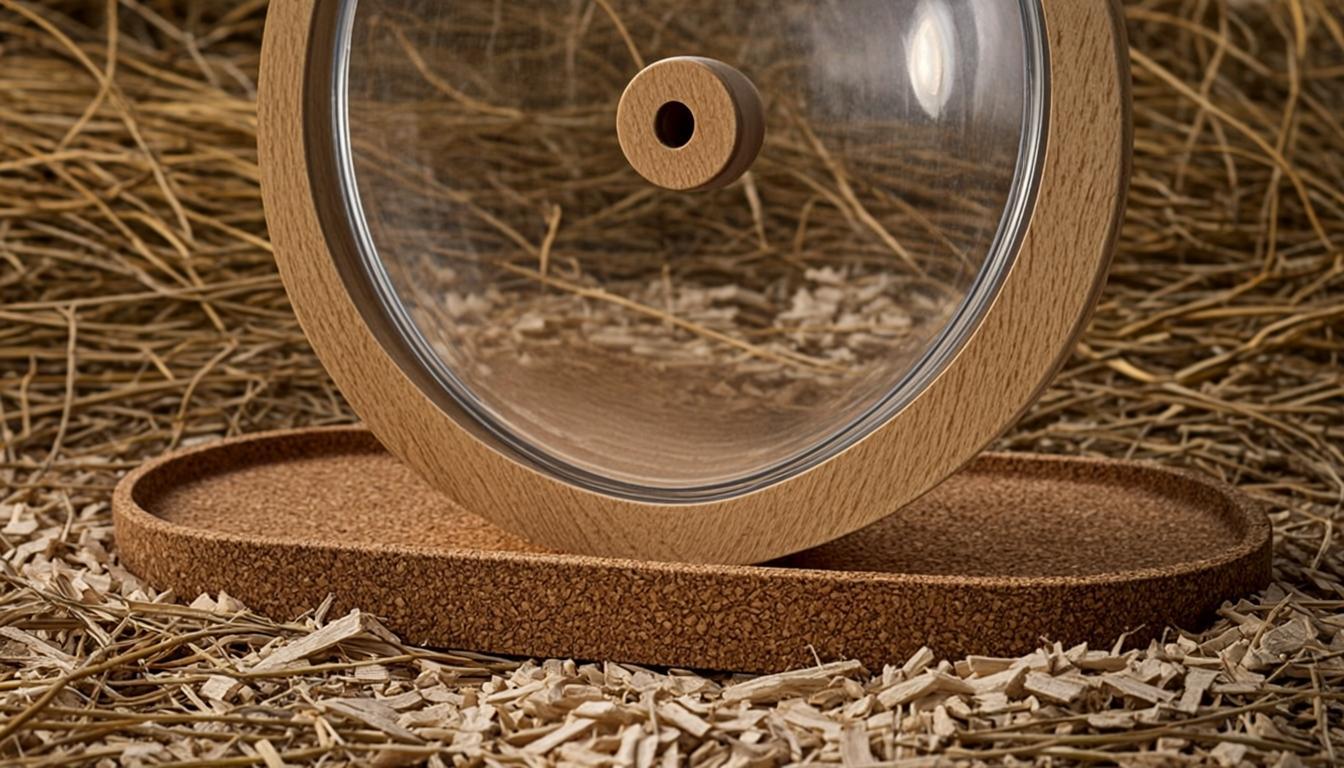
A hamster runs miles a night — it's not a quirk, it's the core of the animal's wild behavior compressed into a cage-sized life. Every other purchase (hideouts, chews, tunnels) is negotiable; the wheel isn't. And the two failure modes of cheap wheels are exactly what this Niteangel fixes: noise and size.
The silence, explained
Cheap wheels squeak because plastic rubs on plastic at the axle. This one runs on dual ball bearings — the same principle as a bicycle wheel — so the contact that makes noise mostly doesn't exist. The result is a soft whir that fades under ordinary room noise. Owners who keep the cage in a bedroom describe the difference as the difference between sleeping and not sleeping.
Size is a spine issue
A hamster on an undersized wheel runs with an arched back, night after night, and that's how chronic injuries happen. Syrians need the larger diameters so the back stays flat while running; dwarfs fit the smaller options. When you order, size up if you're between sizes — nobody ever regretted a wheel that was slightly too big.
The honest drawbacks
It's a premium wheel, and the price gap versus basic models is real — justified by bearings and track width, but real. Bedding and stray poos end up on the running surface (hamsters are hamsters), so it joins the weekly clean routine. Neither drawback changes the verdict: if you're buying once, buy this.
 Enrichment pick