Our verdict
The litter-tracking problem
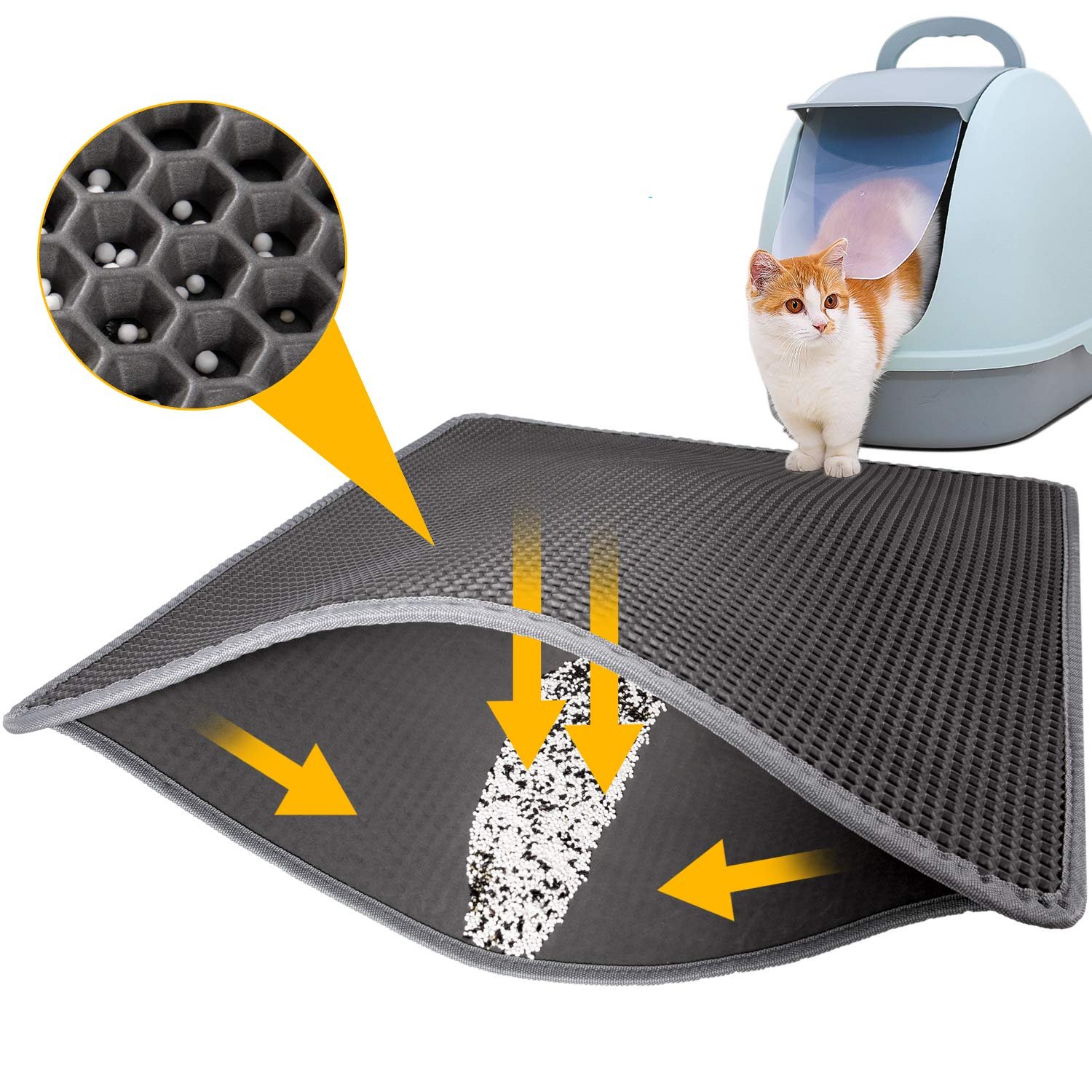
Every clumping litter tracks. Granules stick to paws (and to long-haired cats' fur) and reappear on your bed, kitchen counter and keyboard within hours of cleaning the box. The fix isn't a better litter — it's changing the surface the cat crosses on the way out. A trapper mat gives litter somewhere to go: through the holes, into the mat, until you empty it.
How the iPrimio works
Two layers. The top is a honeycomb of holes big enough for litter granules to fall through as the cat walks, small enough that paws don't sink. The bottom layer is a solid waterproof sheet with a urine-repelling film — so the mat doesn't just trap granules, it stops the other thing that ruins flooring near boxes: the over-the-edge miss and the casual spray. Between cleanings, you lift the top layer, pour the trapped litter back into the box (most of it is perfectly good litter), and done. Deeper cleans are a hose-off or vacuum job; there's no fabric to launder, which is the structural advantage over plush mats.
The honest caveats
Wirecutter, which has tested this category carefully, likes how well it traps but notes the trade-offs we'd flag too: the honeycomb surface is less plush underfoot than fabric mats, so some cats hesitate at first — give them a day, or sprinkle a pinch of used litter on top to make it familiar. On very smooth floors the mat can slide; tuck it tight against the box. And daily use means an occasional clump lands on the surface instead of through a hole — a five-second pickup, but not zero maintenance.
Who should buy it — and who shouldn't
Buy it for any home where tracked litter is the daily enemy, especially covered-box exits and hardwood floors. Skip it only if your cat refuses hard surfaces outright after a fair trial — then a washable fabric mat is the fallback, with less trapping power.
 Best-looking