Our verdict
Why cats don't drink (and why fountains fix it)
Cats descended from desert hunters who got most of their water from prey, so modern cats carry a weak thirst drive and a deep suspicion of still water — which, in nature, means stagnant. That's why a cat will ignore a fresh bowl and drink from a dripping tap. A circulating fountain bridges the gap: moving water reads as safe, and owners routinely see drinking frequency rise within days of adding one. More water in means better kidney and urinary tract health odds — the quiet preventive win that matters most in cats over ten.
Why stainless, specifically
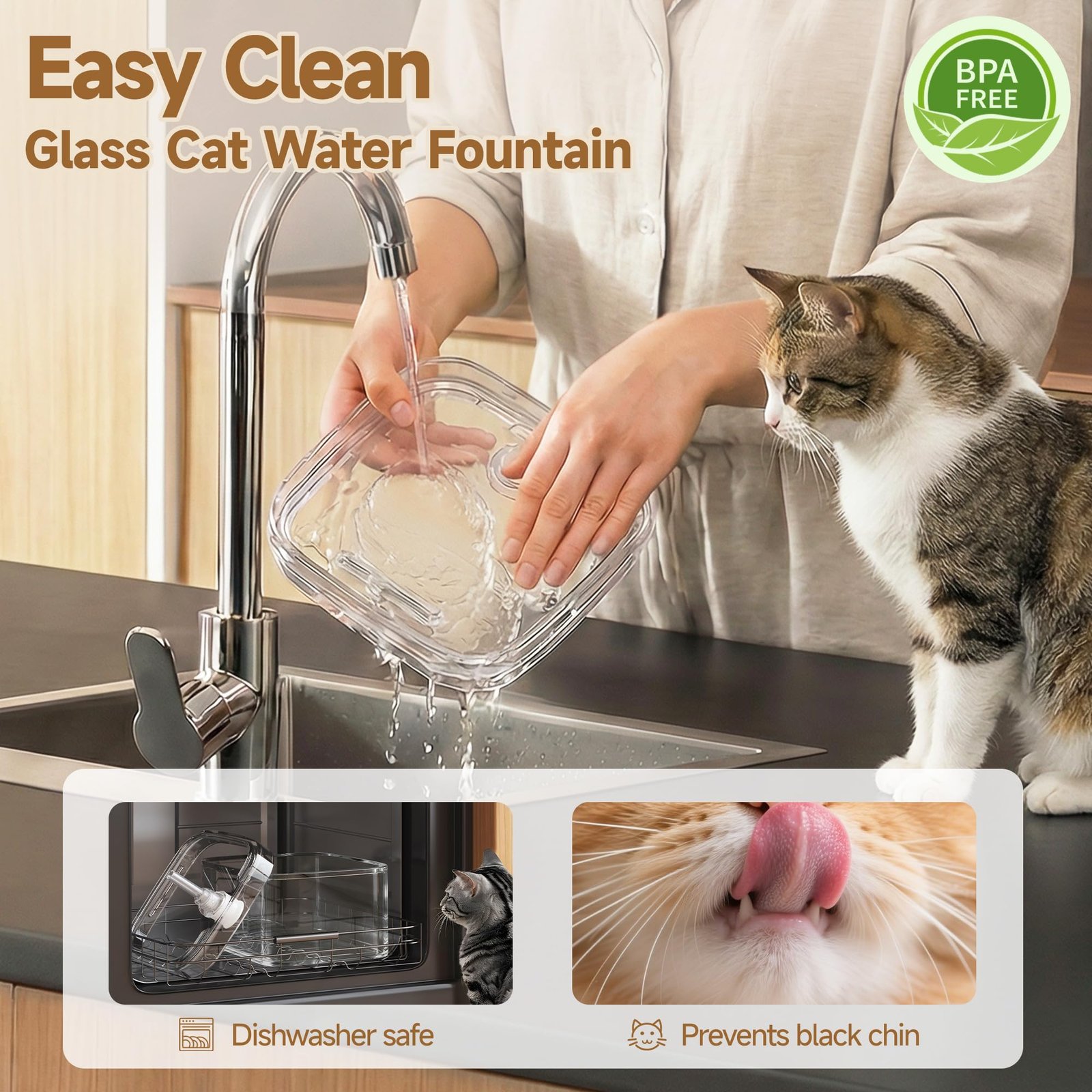
Plastic fountains have two failure modes: scratches that harbor biofilm (the slimy film that makes plastic fountains smell within weeks) and a porous surface that holds odor. Stainless resists both, and this one is fully dishwasher-safe — the difference between a fountain you clean weekly with a brush and one you drop in the machine. For cats with chin acne, which vets commonly associate with plastic bowls and fountains, stainless is the standard recommendation.
Living with it
The pump is the make-or-break part of any fountain, and this one runs quiet — quiet enough that skittish cats don't abandon the water source, and humans don't hear it at night. Two maintenance realities to budget for: filters (carbon + ion-exchange) need replacing roughly monthly, and the pump gets a quick rinse every refill to prevent hair buildup. Neither is hard; both are non-negotiable if you want the fountain to keep earning its spot.
Who should buy it — and who shouldn't
Buy it for cats who ignore still water, multi-cat homes, chin-acne-prone cats, and anyone who's thrown out a slimy plastic fountain. Skip it if you won't keep up with filter changes — a dirty fountain is worse than a clean bowl.
 Best-looking