Our verdict
Are rope toys safe? The honest answer
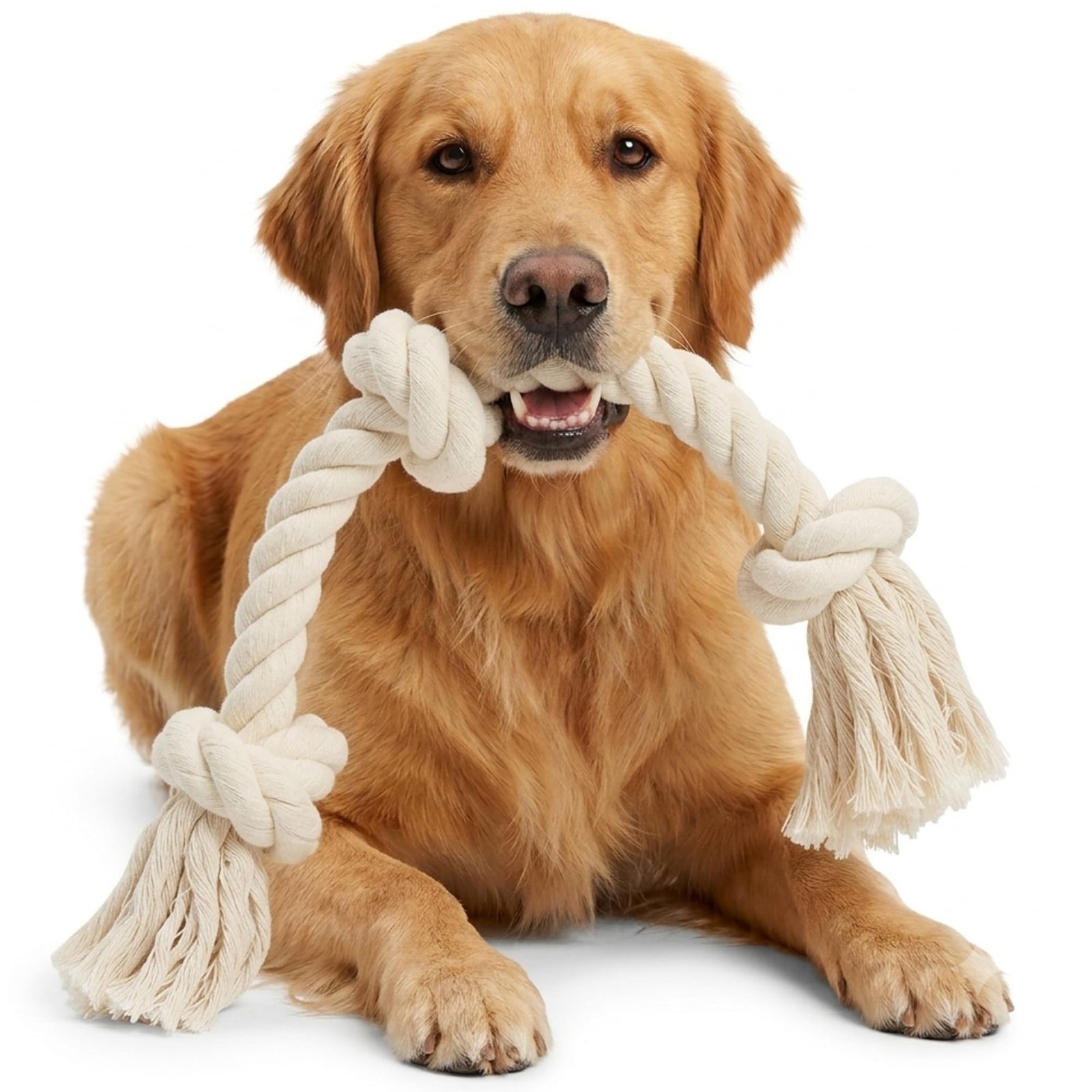
Rope toys carry a real, documented risk: if a dog chews and swallows strands, the fibers can cause intestinal problems that vets call linear foreign bodies. That risk lives almost entirely in solo chewing. Interactive tug — the rope in your hand, the dog in front of you, sessions ending when you say so — removes nearly all of it, because nobody's shredding anything. The Meuuxe is designed for that second use: one pound and a half of tightly woven cotton with a handle that keeps your hand away from the excitement, and a ball knot that gives the dog a legitimate grip target.
Why tug is good for dogs (despite the old myths)
The 'tug makes dogs dominant' idea has been dead in behavior science for decades — the modern consensus, echoed by every positive-reinforcement trainer we read while researching this category, is that tug builds engagement, exercise and impulse control when you teach a reliable 'drop it'. A dog that tugs with you and releases on cue is practicing the exact self-control owners want. Sessions also tire dogs in a way walks don't: ten minutes of tug is a real workout for jaw, neck and brain.
Durability notes
At 726 grams with a tight weave, this rope is in the heavyweight class — the weight matters because light ropes wrap around a dog's legs and frustrate the game. All cotton ropes fray eventually; the maintenance rule is simple: when strands pull loose enough to swallow, trim them, and when fraying wins, retire the toy. That's not a defect — it's the material's nature, and it's why rope toys cost a few dollars, not fifty.
Who should buy it — and who shouldn't
Buy it for medium and large dogs that love tug, engagement training with adolescent dogs, and households that want a cheap, effective energy-burner. Skip it for solo-chewer dogs that dismantle toys unattended, and for heavy chewers consider rubber chew products designed for that purpose instead.
 Best for boredom